
Read the report below or click for PDF HERE
Take our community survey HERE
1. Introduction
Over the past 6 to 12 months, residents and business owners in Sorell have expressed concern about reports of youth crime and antisocial behaviour. People have told us they feel unsafe and are worried about the impact on local businesses. Some community members have called for increased police presence and for the state government to be tougher on crime. However, our research has shown that this is a complex issue and will need a coordinated response from our community and all areas of government. This document will explore local crime rates, examine the underlying reasons why some young people engage in antisocial and criminal behaviour, and identify ways our community and all levels of government can work together to better support young people and prevent future harm.
This document serves as an interim report to support early discussions with young people, the broader community, and all levels of government. Following these conversations, we aim to deliver a final report containing a set of actionable recommendations - a roadmap for better supporting young people and reducing harm across our society.
Terms in italics are defined in the glossary at the end of this document.
2. About Sorell Community Action Network (formely The People United)
We are a group of local residents who work together, combining our skills and resources, to advocate for our community and to improve peoples’ day-to-day lives. We take action on local issues and are dedicated to making our neighbourhoods a better place for everyone. Although we are not psychologists or criminologists, we have done significant research and will be consulting widely before publishing our final report, to make sure what we say is factual and evidence based, as well as being applicable and relevant to our community.
3. Interim report purpose and outline
We know this is a complex issue and we want to make sure our suggestions make sense for everyone affected. This interim report is intended to be a tool for people to understand youth crime and inform discussions.
Our interim report will:
- Investigate the frequency of youth criminal behaviour in the Sorell Municipality
- Explore what makes young people prone to criminal and antisocial behaviour
- Suggest some actions to reduce the prevalence and impact of these behaviours
Our final report will:
- Expand on the underlying causes of youth crime
- Examine how we can support young people to have their developmental needs met
- Explore what experts say about preventing antisocial and criminal behaviour and what has worked in other places
- Review the existing services in our area
- Highlight any gaps in services and opportunities for change
- Formulate a community led, evidence based, holistic action plan to better support young people, their families, and the broader Sorell community
We plan to discuss our research with key organisations including Sorell Council, local schools, Tasmania Police, and youth organisations. We are also inviting comments and discussion from community members, including young people, parents, and business owners.
4. Setting the scene
4.1 Adult perspectives
Many people in Sorell have shared concerns about “youth crime”. There have been allegations of young people spray painting cars, vandalising buildings, damaging property, and stealing from businesses.
Residents feel that these behaviours are impacting community safety, negatively affecting the enjoyment of local amenities, and reducing traffic to local businesses. It appears there is a general lack of confidence that Tasmania Police and the youth justice system can appropriately address these issues.
"They [young people] are running amok and nobody with authority, including the police, will do anything"
Local resident
4.2 Youth perspectives
Young people are often left out of the conversation when it comes to youth issues. It is also difficult for us to get the perspective of local young people when they feel their views are not taken seriously. While our interim report has limited direct input from young people, we believe in their right to have a meaningful contribution to the process and are taking measures to ensure their voices are included in the final report.
"Adults paint us all with the same brush and I feel like people assume I am going to do something bad because of my age. I just want a place to go and take my mind off things after school."
Local young person
4.3 Crime statistics in the Sorell Municipality and statewide
Data and evidence available from sources including the Australian Bureau of Statistics (ABS) and Tasmania Police helps us paint a picture of the true level of crime in our locality as well as across Tasmania. Although statistics for informal police interactions are not available, the number of formal interactions as well as people being charged and convicted in the court system is surprising.
4.3.1 Youth crime and offences in Tasmania
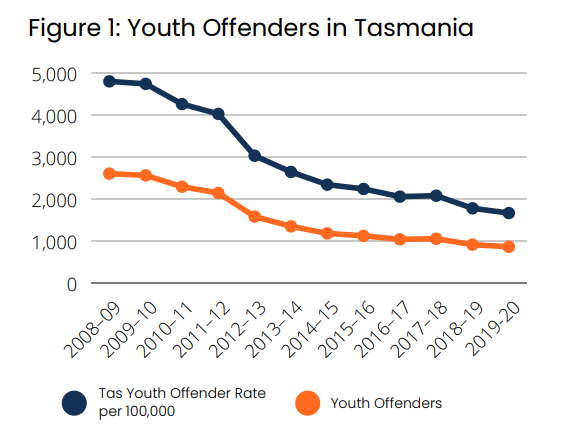
According to the ABS, the number of youth offenders in Tasmania has fallen steadily since 2008-09 (Figure 1)1,2. This appears to reflect the growing body of evidence showing that diverting young people from the justice system and using early intervention programs improves outcomes (see section 7).
4.3.2 Youth crime and offences in the Sorell Municipality
In 2024, just 31 crimes were committed by young people in the Sorell Municipality, by a total of 9 unique youth offenders. This compares to 153 crimes committed by adults in Sorell in 20243.
4.4 Are these statistics accurate and useful?
There is a perception among the community that police ‘can’t do anything’ about young people who exhibit antisocial or criminal behaviour. This leads to concern that the true number of incidents is not reflected by these statistics.
Although the youth crime level in our area is very low, we recognise that some young people involved in antisocial and criminal behaviour may be diverted away from formal criminal justice systems. Through our consultation processes we will attempt to find the number of informal interactions and diversions, but the existing data is still useful in understanding the context.
In section 7, we will explain why Tasmania Police diverts young people from the youth justice system wherever possible. Even though the existing youth justice system has significant issues2, it is available to protect the community from the small number of young people who do need to be held securely.
5. Understanding the adolescent brain
5.1 Adolescent development and behaviour
Adolescence is a unique developmental stage where young people learn who they are as people, separate from their parents, and work towards finding out who they will be as adults4.
An adolescent brain undergoes major changes, especially in areas responsible for decision-making, impulse control, and emotional regulation. We seek to provide a short overview of factors that make young people prone to antisocial or criminal behaviour.
- Reward seeking. The reward-seeking and emotional centres are highly active in adolescence, making young people more prone to risk-taking behaviour and emotional outbursts.
- Emotional regulation. Because young people struggle with emotional regulation (ability to feel an emotion without being overwhelmed), it makes unhealthy behaviours harder to resist, especially when under stress.
- Coping mechanisms. Antisocial behavior can be a way of coping with difficult emotions or challenging life situations (e.g. trauma, family conflict, poverty). Just like an adult having a beer after a hard day, seeking rewards or taking risks can provide relief and a distraction for young people.
- Lack of safety net. Not having a stable, supportive relationship with a parent, caregiver or other trusted adult means a young person may not receive the emotional security and guidance needed to navigate challenges and make healthy decisions.
5.2 Learning through experience
Because the area of the brain that helps with reasoning and “thinking before acting” develops much later than other parts of the brain, young people find it much more difficult to pause and consider the consequences of their actions5. They tend to learn through trial and error, and need the opportunity to make mistakes safely.
Just as we give babies blocks or balls to drop instead of a glass, we must give young people the right tools to take safe risks, and develop their reasoning and decision making skills6.
5.3 Adolescent developmental milestones
Psychologists have identified social and cognitive development milestones in adolescence that form the foundation for healthy emotional, social, and cognitive skills that guide positive behaviour and life outcomes7.
Adolescent development milestones include:
- A sense of identity
- A sense of autonomy
- A value system
- Positive peer relationships
- Financial independence
When young people do not meet their key developmental milestones, they often experience feelings of frustration, low self-esteem, and social disconnection8. Over time, this can lead to antisocial and criminal behaviours, as well as significant issues with:
- Mental and emotional wellbeing
- Using helpful behaviours to cope with difficult times
- Relationships with friends, family, and society as a whole
- Social isolation and/or negative peer influences
- Finding and keeping a job
Ensuring that young people have the opportunity to meet their developmental milestones in a safe and appropriate way will help them participate positively in society in the short and long term.
6. Contributing factors to antisocial and criminal behaviour among young people
In Section 5, we have discussed factors that make all young people more vulnerable to antisocial behaviour and poor decision making. In Section 6, we will discuss additional factors that make some young people even more likely to end up in the criminal justice system, that we as a society can address.
Through appropriate investment and programs, the impact of these three additional factors can be minimised. There are many other things that can impact a young person’s behaviour, however, these factors appear to have a significant impact, are relatively common and/or have interventions and solutions already available.
6.1 Child maltreatment
Child maltreatment includes physical, sexual, and emotional abuse, as well as neglect and exposure to domestic violence9. A person who experienced childhood maltreatment is twice as likely to be arrested as someone who did not; and the likelihood of being arrested and imprisoned is higher for people who experienced multiple types and/or a longer period of maltreatment9.
6.2 Poverty
In Australia, young people living in the poorest areas are six times more likely to end up in the justice system than those in the wealthiest areas10. Almost a quarter of children aged 0-14 in Tasmania live in poverty11, and in 2022, 9% of the Tasmanian population were exposed to severe food insecurity11.
While we don’t have recent local research showing how poverty leads to crime, studies from the UK help fill the gap. A 2025 study by the University of Liverpool12 found that around one in three cases of weapon use and one in four interactions with police at age 17 were linked to long-term poverty and tough family situations. It’s clear there’s a strong connection between growing up in hardship and the chances of getting into trouble with the law.
Given the high levels of poverty among young people in Tasmania and the well-established link between disadvantage and crime, it is clear that addressing these underlying social and economic issues is essential to reducing antisocial and criminal behaviour among young people.
6.3 Language and communication difficulties
As many as 17% of children in Australia have diagnosable issues with language and communication15. Children from disadvantaged backgrounds are more likely to have language delay or problems communicating15. Children and young people with language and communication difficulties are more likely to develop behavioural problems at a young age, which over time may escalate into antisocial and criminal behaviour14.
The Pathways to Prevention Project followed a group of children in a disadvantaged area of Brisbane over 9 years. It aimed to show that supporting young children with language and communication problems, as well as their families, could reduce youth crime. Providing young boys with communication assistance in early childhood and supporting their families significantly lowered the rates of serious offending in their teen years. In contrast, those with complex family needs who missed out on early language support were at higher risk of later crime14.
7. Managing young people who have committed crimes
15 reports and inquiries over more than 20 years have shown that the youth justice system in Tasmania is not preventing crime, and is causing harm to young people and their families16.
7.1 Locking kids up makes things worse
Putting young people in the youth justice system fails to address the root causes of their offending. Research consistently shows that putting people in prison exposes them to further trauma, disconnects them from education and family support, and reinforces criminal behaviour. More than 50 per cent of children aged between 10 and 16 years return to Ashley Youth Detention Centre within 12 months of their release2. This is due to a range of factors, including difficulty reintegrating into society and the failure to address the root causes of their offending—such as lack of stable housing, financial insecurity, and limited access to support services17.
Additionally, data shows that the earlier a young person enters the juvenile justice system, the greater the likelihood they will reoffend and be sentenced to prison in the adult justice system by age 222.
7.2 Locking young people up is expensive
In Tasmania, the government spends $2,744 per day per young person in detention2. However, a young person who is found guilty of a crime may instead be ordered to undergo a community-based order such as a probation or community service order. On average, this costs about $162 a day to administer2, and significantly reduces the likelihood of reoffending compared to prison sentences18.
Reducing the amount of young people in prison and providing more community-based diversion and rehabilitation programs will reduce the cost to taxpayers, and improve outcomes for the long term.
7.3 Increased police presence is ineffective without systemic change
Increasing the visibility of police can improve response times, increasing the chance of spotting a crime in progress, which may act as a deterrent. However, some studies suggest that police stations have minimal effect on the incidence of crime in the area around them - and that closing a police station is more likely to be associated with a decrease in crime rates than an increase19.
As discussed in earlier sections, adolescents generally have increased reward sensitivity and poorer impulse control, meaning visible policing may be less effective at preventing antisocial or criminal behaviour in young people compared to adults. Additionally, police have limited or no power to intervene before a law is broken, and limited or no resources or external services to employ in diverting a young person from behaving in an antisocial or criminal manner.
Increased police presence in Sorell, particularly without an increase in available resources for young people, may not have a positive effect on community safety or youth offending. In particular, given the low local youth offending rate, the cost of employing more police is unlikely the most efficient use of resources. Extra police investment should be weighed against other options to reduce antisocial and criminal behaviour such as youth and diversion programs.
8. Interim Recommendations
The following section will discuss ways that we as a community can support young people and their families to ensure the best possible opportunities to avoid antisocial and criminal behaviour. These initial recommendations will change and evolve based on our conversations with young people, government, and community stakeholders.
8.1 Community/grassroots
- Celebrate and showcase the positive contributions that young people make to our community, reinforcing the value they bring to our neighbourhoods and the relatively low frequency of antisocial behaviour.
- Reassure each other that the Sorell Municipality has relatively low levels of youth crime and relatively low potential for harm from young people
8.2 Local government
- Sorell Council to publish their plan on how they will achieve the actions outlined in their social strategy to support young people, including expected timeline and resources allocated. Publish a yearly progress report that identifies resource shortfalls, and compares progress versus planned outcomes.
- Sorell Council to open a dedicated and permanent Youth space, based on similar successful models in Tasmania such as the Youth Arts and Recreation Centre in Hobart, to provide young people with access to safe recreation and risk taking activities.
- Lobby the state and federal governments to expand access to mentoring services like JCP Youth to the Sorell area
8.3 State government
- Immediately close Ashley Youth Detention Centre and implement trauma informed, evidence based treatment and rehabilitation programs for justice-involved young people.
- Collaborate with the Federal government to increase supply of public housing, ensuring that every family in the local area has an affordable, safe, and secure home.
- Increase funding for local youth mentoring programs such as JCP Youth
- Increase funding for and access to early screening for developmental delays/disorders, eyesight, hearing, and language and communication difficulties, allowing for early intervention and treatment
- Take action to reduce child poverty, including expanding the free school lunch programs in schools, and reducing the out of pocket cost of public schooling like uniforms and excursions.
8.4 Federal government
- Significantly reduce poverty by immediately increasing the rate of the Parenting Payment, Youth Allowance, JobSeeker, and the Disability Support Pension to be above the poverty line.
- Collaborate with the state government to invest in public housing to ensure that there are no families left on the public housing waitlist in Tasmania.
- Free and timely access to mental health support for all young people.
9. Definitions
Children, young people, and youth
Researchers use terms like adolescent, young person, youth, etc to refer to a variety of groups. In this report, we will use the term young person to describe people between the ages of 10-19 (inclusive). We will use the term young adult to refer to people between the ages of 19 and 25. We will also use the term child to reference people under the age of 10.
Early intervention
We define an early intervention program as one which targets at-risk young people and aims to reduce the likelihood of anti-social and criminal behaviour, and/or support positive community engagement and healthy relationships with friends and families.
Antisocial behaviour
Antisocial behaviour is generally defined as actions that negatively impact the community’s perceptions of safety and personal quality of life - for example, swearing and yelling in public, loitering, and intimidation of members of the public. In this report, we are defining antisocial behaviour separate to crime, however crimes (e.g. trespassing, vandalism, etc) also negatively impact the safety of the community.
- Crime and criminal behaviour
- A crime is any activity that is prohibited by the law, for example vandalism, graffiti, theft, or assault. We define criminal behaviour separately to crime in that it is behaviour or actions that break the law, but may not result in being charged or convicted of a crime for reasons such as age or mental capacity.
- Poverty
- Poverty is generally the lack of means to live in society, for example through employment, education, and social relationships. In Australia, most poverty is “relative poverty” - meaning a person cannot afford “socially defined necessities” like utility bills, appropriate clothes, or timely medical care. Some Australians live in “absolute poverty”, meaning being unable to afford housing or food.
About the authors
Written in June 2025 by Kristian and Oliver as part of the Sorell Community Action Network - a collective of ordinary Sorell locals who are passionate about all members of our community having access to the resources they need to thrive.
10. References
- Australian Bureau of Statistics. (2023-24). Recorded Crime - Offenders. ABS.
- Tasmania Legal Aid. (2021). Children First: Children in the Child Safety and Youth Justice System. TLA. https://www.legalaid.tas.gov.au/wp-content/uploads/2024/06/Children-First-Report.pdf.
- Tasmania Police. (2025). Youth charges and cautions in Sorell and West Tamar LGAs in 2024 [dataset]. TasPol.
- Sanci, L., Webb, M., & Hocking, J.S. (2018). Risk taking behaviour in adolescents. Australian Journal of General Practice, 47(12). https://doi.org/10.31128/AJGP-07-18-4626.
- Modecki, K.L., & Uink, B. (2018). Understanding delinquency during the teenage years: Developmental pathways of antisocial decision making among disadvantaged youth. Criminology Research Advisory Council. https://www.aic.gov.au/sites/default/files/2020-05/13-1415-FinalReport.pdf.
- ReachOut. (2024, May 16). Risk taking behaviour in teens. https://parents.au.reachout.com/life-skills-and-challenges/risk-taking/risk-taking-and-teenagers.
- Raising Children Network. (2024). Social & emotional changes: 9-15 years. https://raisingchildren.net.au/pre-teens/development/social-emotional-development/social-emotional-changes-9-15-years.
- Children’s Hospital of Philadelphia. (2020). Missing Milestones Can Affect Mental Health in Teens. https://www.chop.edu/news/health-tip/missing-milestones-can-affect-mental-health-in-teens.
- Mathews, B., Papalia, N., Napier, S., Malacova, E., Lawrence, D., Higgins, D., Thomas, H., Erskine, H., Meinck, F., Haslam, D., Scott, J., Finkelhor, D., & Pacella, R. (2023). Child maltreatment and criminal justice system involvement in Australia: Findings from a national survey. Trends & issues in crime and criminal justice, 681. https://doi.org/10.52922/ti77215.
- Australian Institute of Health and Welfare. (2025). Youth justice in Australia 2023–24. AIHW.
- Miranti, R., Freyens, B., Vidyattama, Y., Tanton, R., & Shakir, G.R. (2024). Nurturing Inclusion: Paving the Way to Improved Child Wellbeing. UnitingCare Australia. https://unitingcare.org.au/wp-content/uploads/2024/03/2024-Child-Social-Exclusion-Report-FINAL.pdf.
- Cox, J., Dyke, H., Martino, R., & Edwards, L. (2022). Report on the Tasmanian Population Health Survey 2022. Department of Health, Tasmania.
- Adjei, N.K., Jonsson, K.R., Opoku-Ware, J., Yaya, S., Chen, Y., Bennett, D., McGovern, R., Munford, L., Black, M., & Taylor-Robinson, D. (2025). Impact of family childhood adversity on risk of violence and involvement with police in adolescence: findings from the UK Millennium Cohort Study. Journal of Epidemiology & Community Health, (79), 459-465. https://doi.org/10.1136/jech-2024-223168.
- Allen, J., Homel, R., Vasco, D., & Freiberg, K. (2024). Family support, enriched preschool and serious youth offending. Trends & issues in crime and criminal justice, 700. https://doi.org/10.52922/ti77567.
- Walker, C., & Haddock, R. (2020). Developmental Language Disorder: A disability, health, and education challenge. Deeble Institute. https://ahha.asn.au/wp-content/uploads/2020/05/evidence_brief_no_20._developmental_language.pdf.
- Neave, M., Bromfield, L., & Benjamin, R. (2023). Commission of Inquiry into the Tasmanian Government’s Response to Child Sexual Abuse in Institutional Settings (Vol 5).
- Ravulo, J. (2017, November 3). Holistic approaches to reduce recidivism in young offenders. Children’s Court of NSW s 16 Conference, Sydney, NSW. https://www.judcom.nsw.gov.au/publications/benchbks/children/CM_Holistic_approaches_reducing_recidivism.html.
- Australian Institute of Health and Welfare. (2023). Young people returning to sentenced youth justice supervision 2021-22. AIHW.
- Boivin, R., & de Melo, S.N. (2023). Do police stations deter crime? Crime Science, 12(15). https://doi.org/10.1186/s40163-023-00193-4.